How to Explain an Employment Gap Without Losing the Interview
Anudithi Saxena · Career Consultant · · 2 min read
Most people with a break in employment do two things wrong. They try to hide it, and then they over-explain it when asked. Both signal the same thing to a hiring manager: that the candidate thinks the gap is disqualifying.
It usually isn’t. Recruiters see gaps constantly: redundancy, relocation, caring responsibilities, health, visa processing, a business that didn’t work out. What they are actually screening for is whether you can account for the time honestly and move the conversation forward.
Put it on the CV, not in the cover letter
Leaving a gap unexplained invites the worst assumption. A single line in your work history is enough:
Career break, Jan 2025 to Mar 2026. Relocation and family care. Completed AWS Solutions Architect certification during this period.
That does three things: it names the period, gives a reason without detail, and shows the time wasn’t idle. You do not owe anyone a fuller account than that in writing.
Keep the spoken answer to three sentences
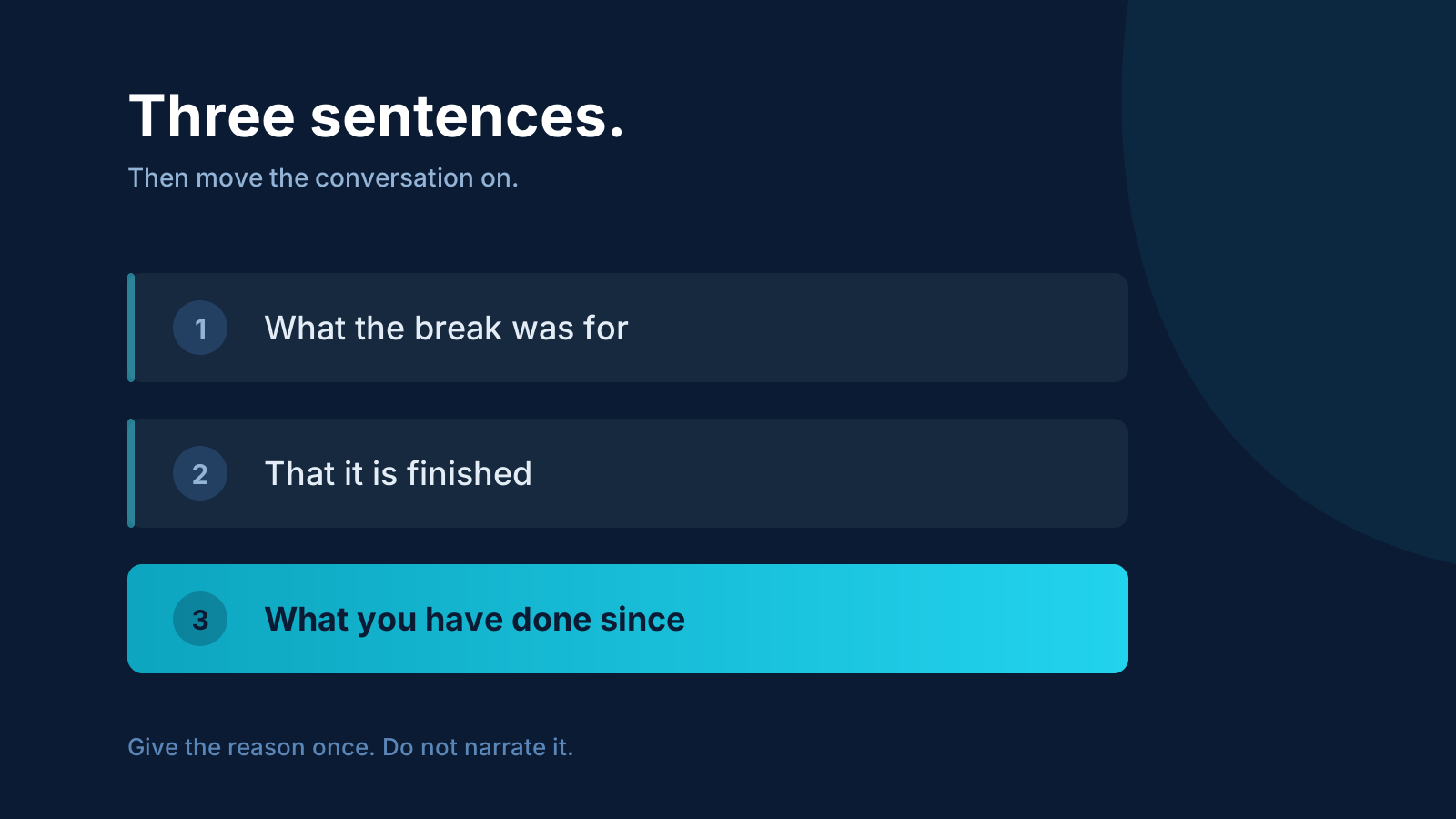
When it comes up in interview, the structure that works is: what happened, what you did about it, what you are doing now.
“I was made redundant when the team was restructured in early 2025. I used the time to finish my Oracle HCM certification and take on two freelance implementation projects. I have been actively interviewing since March and I am specifically looking for a functional consultant role.”
Then stop talking. The most common mistake is filling the silence, which turns a neutral fact into an apology.
What actually damages you
Not the gap itself, but these:
- Vagueness. “I was figuring things out” reads as evasion. Give a reason, even a brief one.
- Bitterness. Criticising a previous employer costs you more than the gap ever will.
- No evidence of activity. A gap with nothing in it is harder than a gap with a course, a contract, a project, or volunteering.
- Dates that don’t match. Your CV, LinkedIn and application form must agree. Recruiters check. If you are not sure how yours reads to a recruiter, send it to us and we will tell you.
If the gap is long
Beyond about eighteen months, expect more probing, and consider whether a short contract or a project engagement is the faster route back. This is exactly where our job support helps, because finding that first re-entry role is a targeting problem, not a persuasion one. Getting a recent role on your CV, even a six-month contract, resets the conversation entirely. It is often easier to get the second job than the first one after a break.
The part most people skip
Rehearse it out loud. Not in your head. Out loud, ideally to someone who will tell you when you sound defensive. The answer that reads fine on paper often comes out apologetic when spoken, and the interviewer responds to tone as much as content.
If you have the skills but a gap has stalled your search, this is exactly the situation our job support works for: positioning, applications and interview preparation, with no training course attached. You can fill in the career restart form in about three minutes and we will come back to you to talk through where your search is stuck.
Written by
Anudithi Saxena
Career Consultant
Advises candidates on positioning, interview preparation and career transitions.