What Actually Happens to Your Resume After You Apply
Sumit Saxena · Delivery Lead · · 4 min read
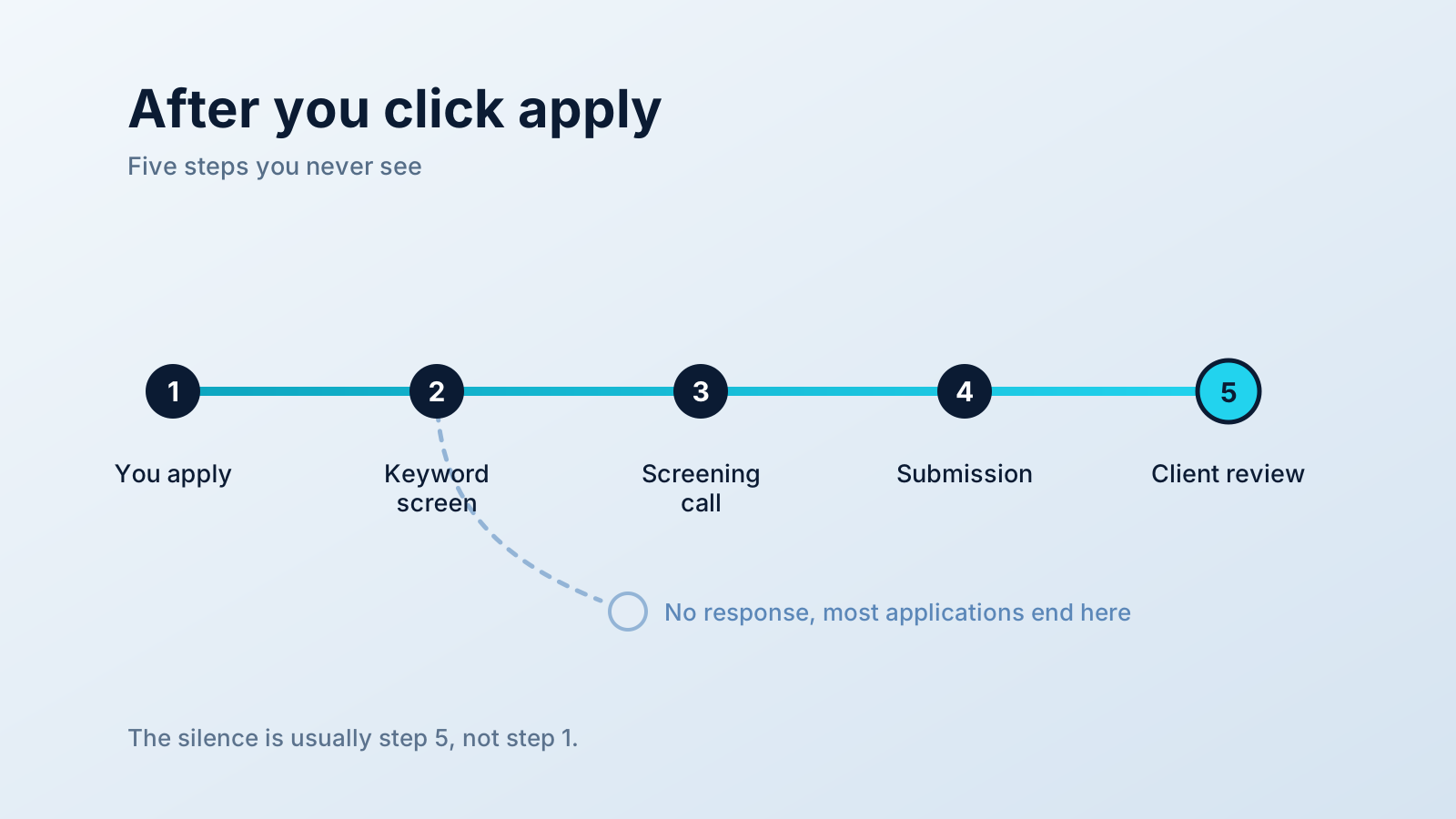
Candidates ask me some version of this every week: “I applied two weeks ago and heard nothing. Did anyone even look at it?”
Usually, yes. But not in the way people imagine. There is a chain of steps between your application and a hiring manager’s inbox, and most of the reasons applications die have nothing to do with whether you can do the job. Once you understand the chain, a lot of job search advice stops being folklore and starts making sense.
Here is what the path actually looks like for a typical technology contract or full-time role in the US market.
Step 1: The requirement exists before the posting does
By the time a job is public, the client has usually already told their staffing partners what they want, and submissions have started. That is why applying on day one matters more than people think. On a role with a moderate profile, a recruiting team may submit their first candidates within 48 hours of receiving the requirement.
This is also why the same job appears on six different job boards under slightly different titles. Multiple vendors are working the same requirement. It is not a scam. It is how the contract staffing market is structured.
Step 2: Keyword screening, then a human, in that order
Your resume goes into an applicant tracking system. The recruiter searches it the way you would search Google: the exact skill terms from the requirement.
This is the step people optimize for badly. You do not need to stuff keywords or hide white text. Modern systems flag that, and the recruiter reading it will notice. What you need is for the terms the client used to actually appear in your work history, in the context of what you did.
If the requirement says “Oracle HCM Cloud: Core HR, Absence Management, Fast Formula,” and your resume says “worked on Oracle HR modules,” you will not surface in the search. Not because a robot rejected you, but because you were never in the result set a human reviewed.
The fix is dull and effective: read the requirement, and make sure every skill you genuinely have appears in your resume using the same words the requirement uses. If you want a second opinion on how yours reads, send it to us.
Step 3: The screening call
Whoever calls you is confirming three things, usually in under fifteen minutes:
- Are you real and available? Current location, work authorization, notice period, rate or salary expectation.
- Does your experience match what you wrote? Expect one or two specific questions about a project on your resume. If you cannot discuss it in detail, that is the end of it.
- Will you stay engaged? Recruiters get burned constantly by candidates who go silent after submission. Being responsive is a genuine differentiator.
Answer the rate question with a number, not “whatever is standard.” Ambiguity reads as inexperience, and it stalls the submission while someone chases you for it.
Step 4: The submission
This is the step candidates never see. The recruiter writes a short summary of you and sends it, with your resume, to the client or to the vendor who holds the contract. Most clients cap how many candidates a vendor can submit, often three to five per requirement.
That cap is the single most important thing to understand about your job search. Your resume is not competing against everyone who applied. It is competing for a slot in a small submission list, and the recruiter picks the profiles they can defend if the client asks a question.
The candidates who get those slots are the ones who were easy to work with, answered fast, and gave the recruiter clean information.
Step 5: Client review and the silence
The client shortlists from all vendors’ submissions together. This is where the wait happens, and where the recruiter genuinely does not know anything. When someone tells you “I haven’t heard back yet,” they are usually telling the truth.
Feedback at this stage is rare and rarely detailed. “Client went with a stronger profile” is often all that comes back, and sometimes nothing comes back at all, because the requirement was put on hold or filled internally.
What this means for how you job hunt
Apply early, and apply once. Submitting the same profile to one job through four different vendors creates a duplicate-submission conflict at the client, and it can get you removed from consideration entirely. Pick one vendor per requirement and tell them clearly if you have already been submitted elsewhere.
Track who submitted you where. Keep a simple list: company, role, vendor, date. When a second recruiter calls about the same role, you can answer immediately instead of guessing.
Follow up once, specifically. Five days after your screening call, one short message: “Following up on the Business Analyst role at [client] you submitted me for on the 14th. Any update?” That is useful. Messaging every second day is not, and it costs you goodwill you will need later.
Build two or three real recruiter relationships. Someone who has placed you once, or worked with you seriously, will call you first when the next requirement lands. That is worth more than a hundred cold applications.
Do not take the silence personally. A rejection at step five usually means someone else’s profile matched the requirement more literally. It is not a verdict on your career.
The market rewards candidates who understand that hiring is a process with steps, deadlines, and people under pressure at every stage. Make yourself easy to move through it.
At Campus4tech we work with candidates through this whole chain: positioning the profile, managing submissions and preparing for the client interview. We stay with people after they join. For experienced candidates who don’t need a course, job support is available on its own, or fill in the career restart form and someone will come back to you to talk it through.
Written by
Sumit Saxena
Delivery Lead
Focuses on candidate submissions, interview coordination and employer relationships.