Career Restart
Your CV After a Maternity Break: What to Put on the Page, Line by Line
Anudithi Saxena · Career Consultant · · 22 min read
Sample CVs, side by side
See the break written onto a real page
Pick a country format and a length of break. The career break entry is highlighted on every version, in the place it actually belongs.
Open this sample full size Open this sample full size Open this sample full size Open this sample full size Open this sample full size Open this sample full size Open this sample full size Open this sample full size Open this sample full size Open this sample full size Open this sample full size Open this sample full size
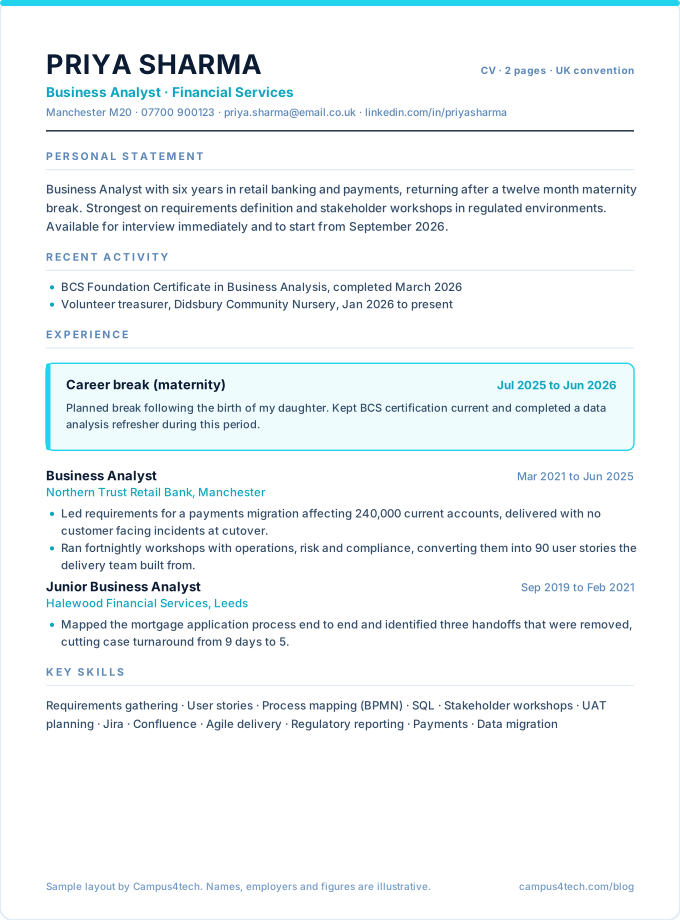
United Kingdom · 1 year break
A short break that ended recently. The break line is one calm entry and the rest of the page carries on as normal.
What this version does differently
- The break is one labelled line with real dates, not a hole between two jobs.
- The personal statement names the break in six words and then moves straight back to capability.
- One dated 2026 item exists, so the newest evidence on the page is this year rather than last year.
United Kingdom convention
UK employers expect a CV of two pages with a short personal statement at the top. No photograph, no date of birth and no marital status. Pregnancy and maternity are protected characteristics under the Equality Act 2010.
Want this done to your own CV? Send it to our team for a review .
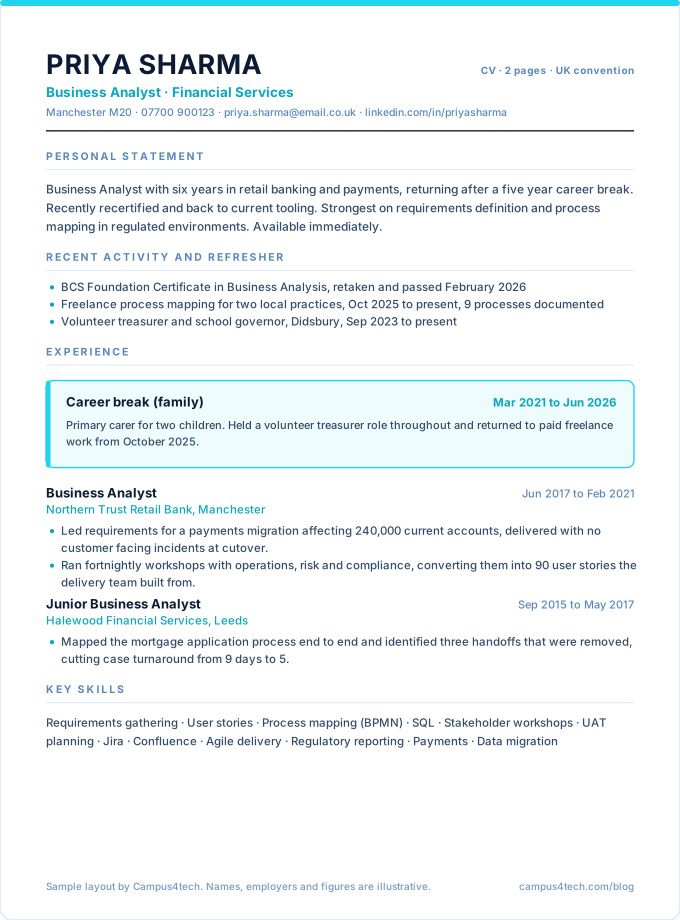
United Kingdom · 5 year break
A long break that ended recently. The page needs dated recent activity, or the most recent evidence of you is from 2021.
What this version does differently
- A five year break needs dated activity or the newest proof of you is from 2021. This page has three dated items.
- The recent activity block sits above the work history, so a recruiter reads 2026 before they reach 2021.
- The break entry names one real thing that continued through it. Volunteer work counts and it is checkable.
United Kingdom convention
UK employers expect a CV of two pages with a short personal statement at the top. No photograph, no date of birth and no marital status. Pregnancy and maternity are protected characteristics under the Equality Act 2010.
Want this done to your own CV? Send it to our team for a review .
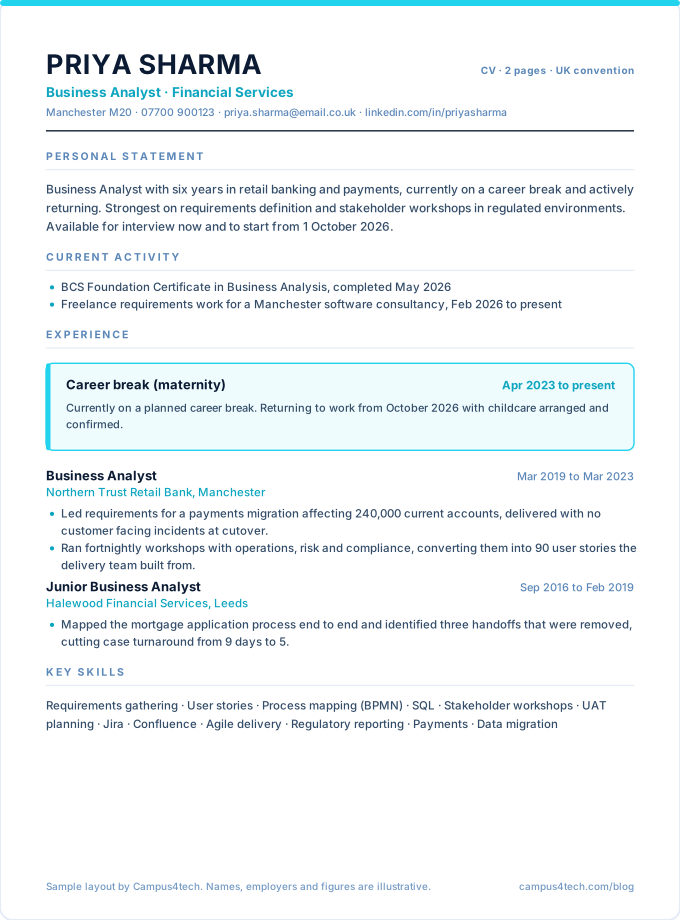
United Kingdom · 2023 to present
You are still on the break and applying anyway. The break entry ends in Present and the availability date is stated on the page.
What this version does differently
- The break entry ends in Present, which is honest and stops the dates looking like an error.
- The start date is stated on the page. A recruiter reading a live break will ask when you can start, so answer it before they ask.
- Saying childcare is arranged removes the doubt the recruiter is not allowed to raise but is quietly weighing.
United Kingdom convention
UK employers expect a CV of two pages with a short personal statement at the top. No photograph, no date of birth and no marital status. Pregnancy and maternity are protected characteristics under the Equality Act 2010.
Want this done to your own CV? Send it to our team for a review .
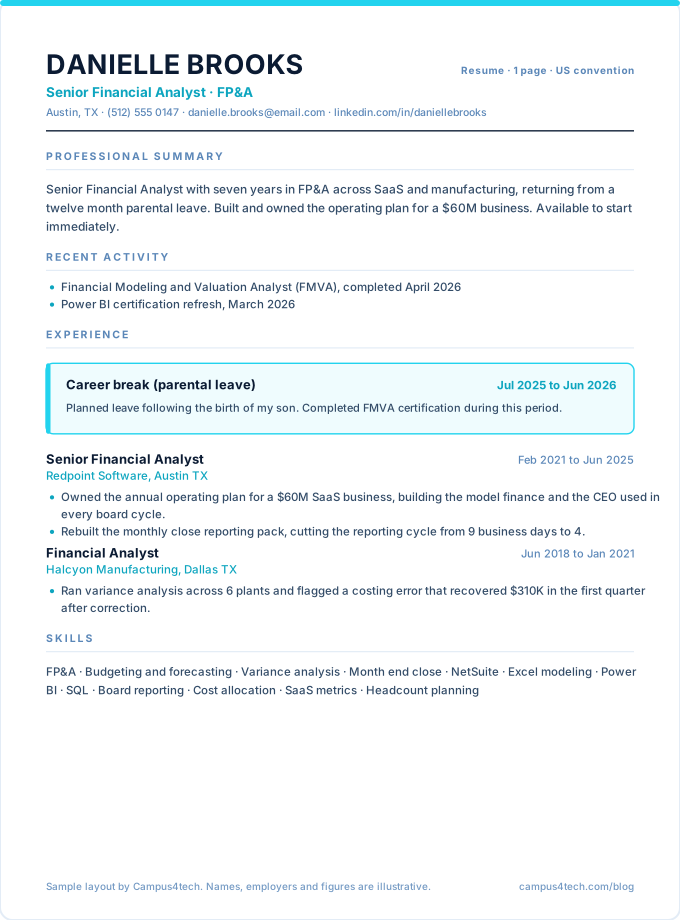
United States · 1 year break
A short break that ended recently. The break line is one calm entry and the rest of the page carries on as normal.
What this version does differently
- One page. Everything that does not earn its place has been cut, which is the US expectation for this level.
- No photo, no date of birth, no marital status and no mention of the child's age. US employers are careful about what they can consider.
- Every bullet carries a number. The break line does not need one and does not try.
United States convention
US resumes run to one page for most mid level roles and carry no personal details at all. No photo, no age, no marital status and no family information, partly because employers are careful about what they are allowed to consider.
Want this done to your own CV? Send it to our team for a review .
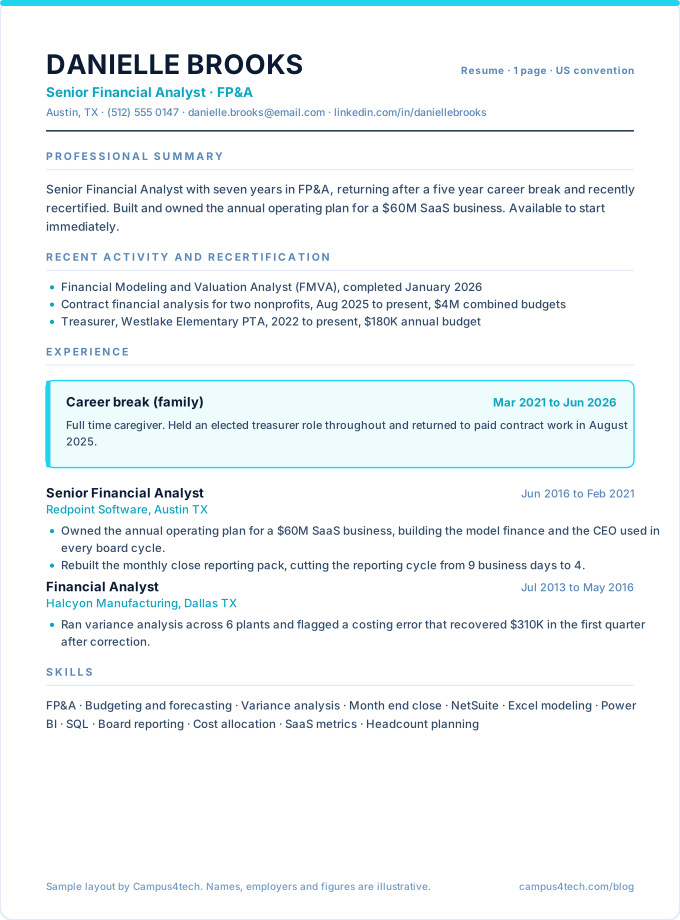
United States · 5 year break
A long break that ended recently. The page needs dated recent activity, or the most recent evidence of you is from 2021.
What this version does differently
- The PTA treasurer role is on here on purpose. It is a real budget, it is dated, and it is verifiable.
- Recent activity is placed above work history so the reader hits 2026 before 2021.
- The oldest role is compressed to a single bullet. On a one page US resume, a five year break costs you the space.
United States convention
US resumes run to one page for most mid level roles and carry no personal details at all. No photo, no age, no marital status and no family information, partly because employers are careful about what they are allowed to consider.
Want this done to your own CV? Send it to our team for a review .
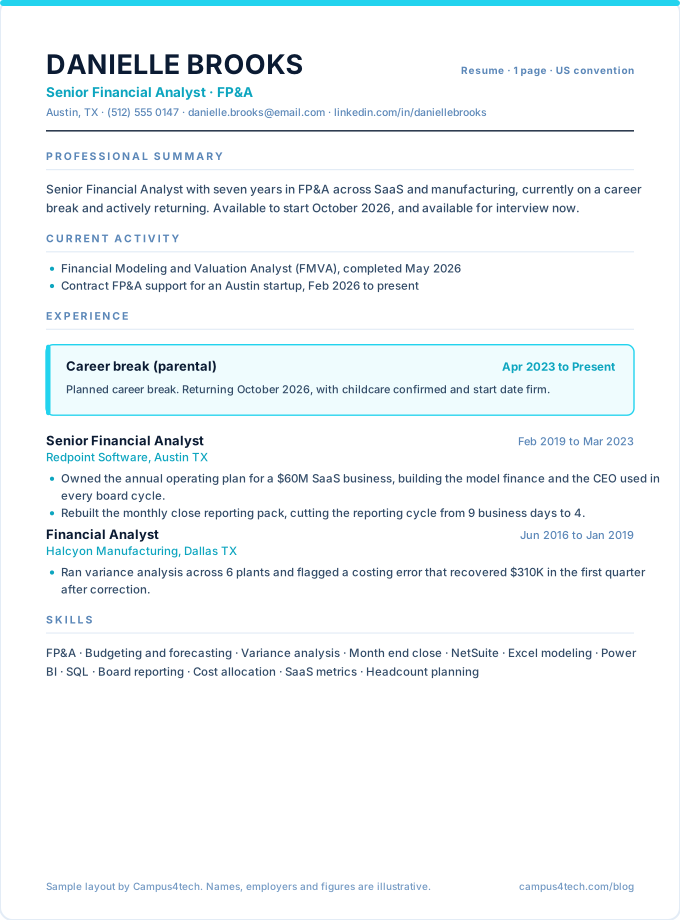
United States · 2023 to present
You are still on the break and applying anyway. The break entry ends in Present and the availability date is stated on the page.
What this version does differently
- Present is the correct word here. Backdating the end of a live break to look employed is the one thing that ends the conversation.
- The start date appears twice, in the summary and in the break entry, because that is the question the recruiter has.
- Contract work during the break is listed as contract work. It is not dressed up as a permanent role.
United States convention
US resumes run to one page for most mid level roles and carry no personal details at all. No photo, no age, no marital status and no family information, partly because employers are careful about what they are allowed to consider.
Want this done to your own CV? Send it to our team for a review .
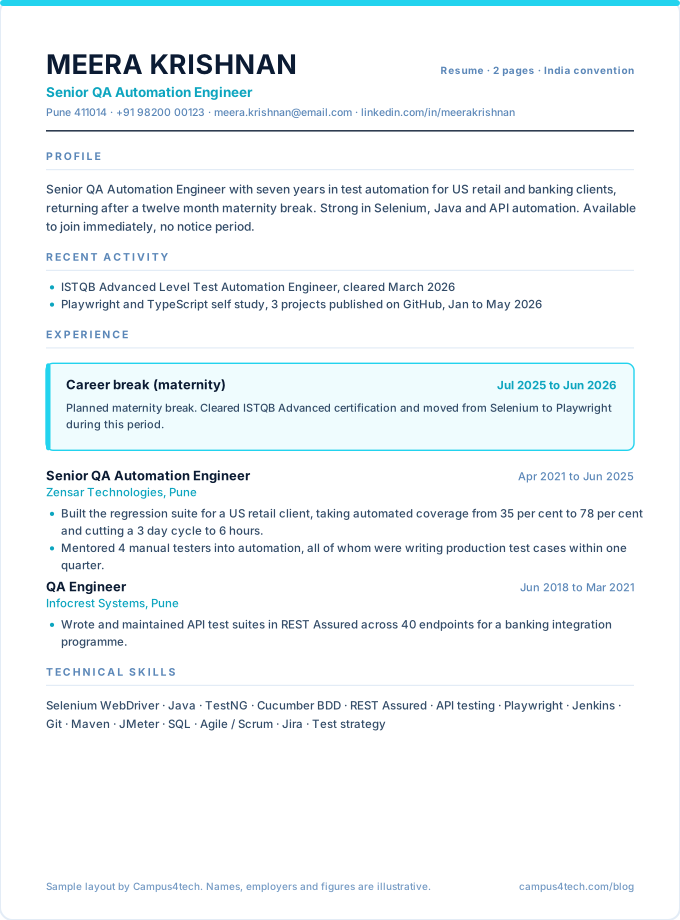
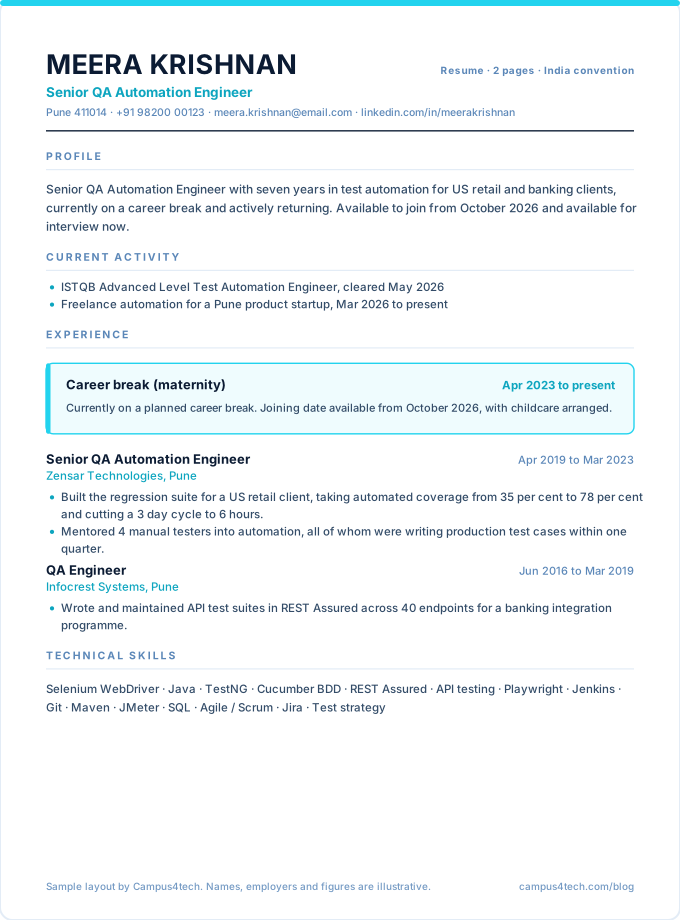
India · 1 year break
A short break that ended recently. The break line is one calm entry and the rest of the page carries on as normal.
What this version does differently
- Availability is stated at the top. Indian recruiters screen on notice period before they screen on skill, so answer it early.
- No photograph, no date of birth, no father's name and no marital status, even though many Indian templates still include them.
- The GitHub work is the proof. For a technical role after a break, something a reviewer can open beats any claim you make.
India convention
Two pages is normal in India and recruiters expect an availability or notice period line near the top. Leave off the photograph, date of birth, father's name and marital status even though older templates include them.
Want this done to your own CV? Send it to our team for a review .
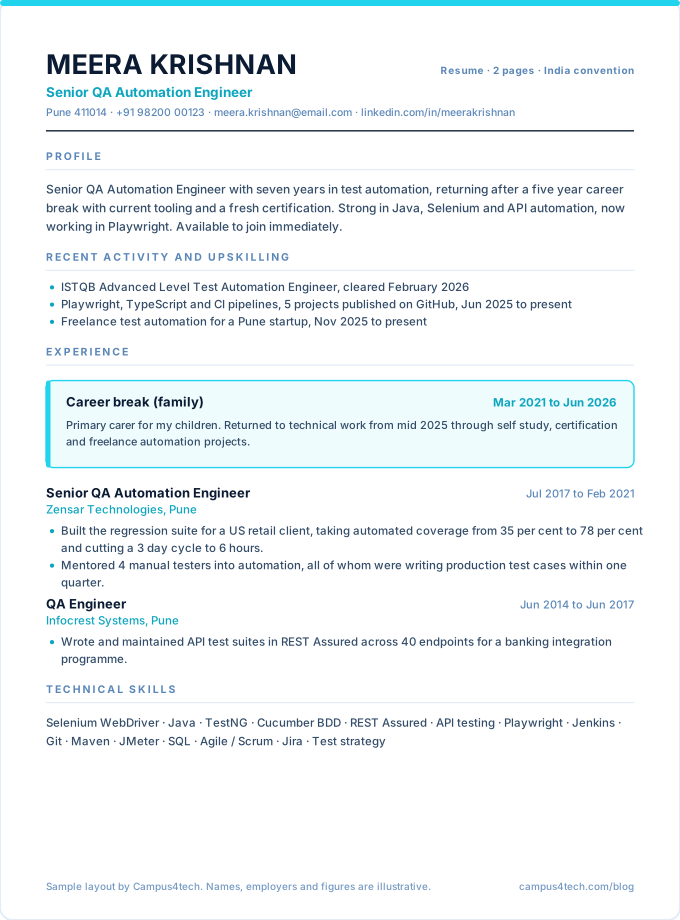
India · 5 year break
A long break that ended recently. The page needs dated recent activity, or the most recent evidence of you is from 2021.
What this version does differently
- Five years is long enough that the stack moved. This page shows the newer tooling rather than claiming the old stack is still enough.
- Freelance work during the break is dated and named, which converts the break from empty time into a short recent track record.
- The oldest role is compressed to one line. Detail belongs to the last two roles and to what you have done this year.
India convention
Two pages is normal in India and recruiters expect an availability or notice period line near the top. Leave off the photograph, date of birth, father's name and marital status even though older templates include them.
Want this done to your own CV? Send it to our team for a review .
India · 2023 to present
You are still on the break and applying anyway. The break entry ends in Present and the availability date is stated on the page.
What this version does differently
- A live break plus a firm joining date reads as organised. A live break with no date reads as undecided.
- The recruiter's first two questions here are notice period and joining date. Both are answered above the fold.
- Freelance work makes the break current rather than dormant, and it gives you something to talk about in the screening call.
India convention
Two pages is normal in India and recruiters expect an availability or notice period line near the top. Leave off the photograph, date of birth, father's name and marital status even though older templates include them.
Want this done to your own CV? Send it to our team for a review .
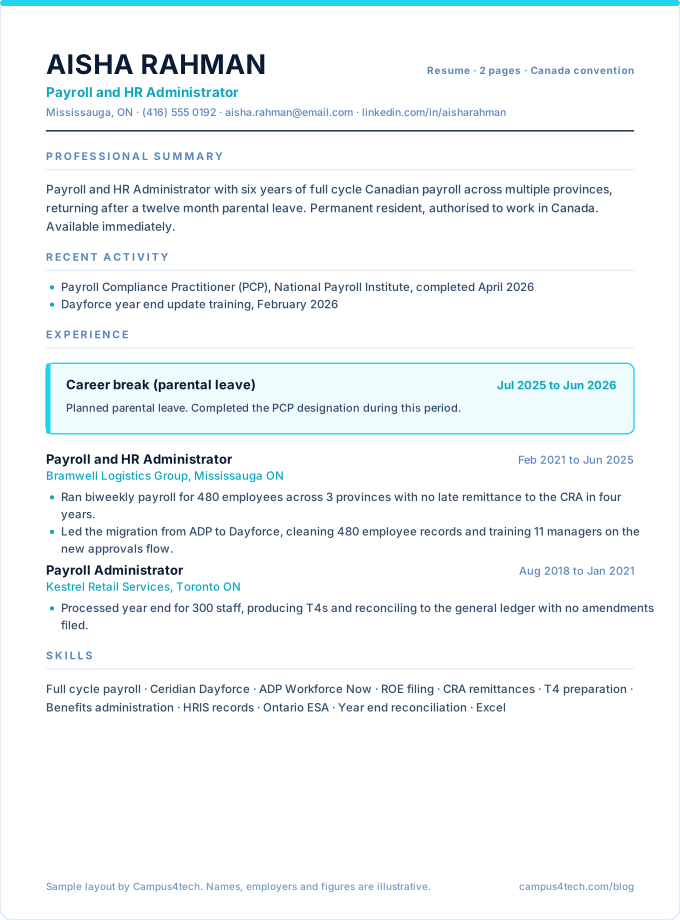
Canada · 1 year break
A short break that ended recently. The break line is one calm entry and the rest of the page carries on as normal.
What this version does differently
- The work authorisation line is on the page. It answers the one question that decides whether a recruiter can act on your file.
- Parental leave is normal and expected in Canada. One labelled line is all it needs, with no apology attached.
- The PCP designation is the credential this market actually screens for, so it sits high rather than at the bottom.
Canada convention
Canadian resumes look close to US ones but two pages is accepted and a work authorisation line near the top saves the recruiter a question they cannot legally ask directly.
Want this done to your own CV? Send it to our team for a review .
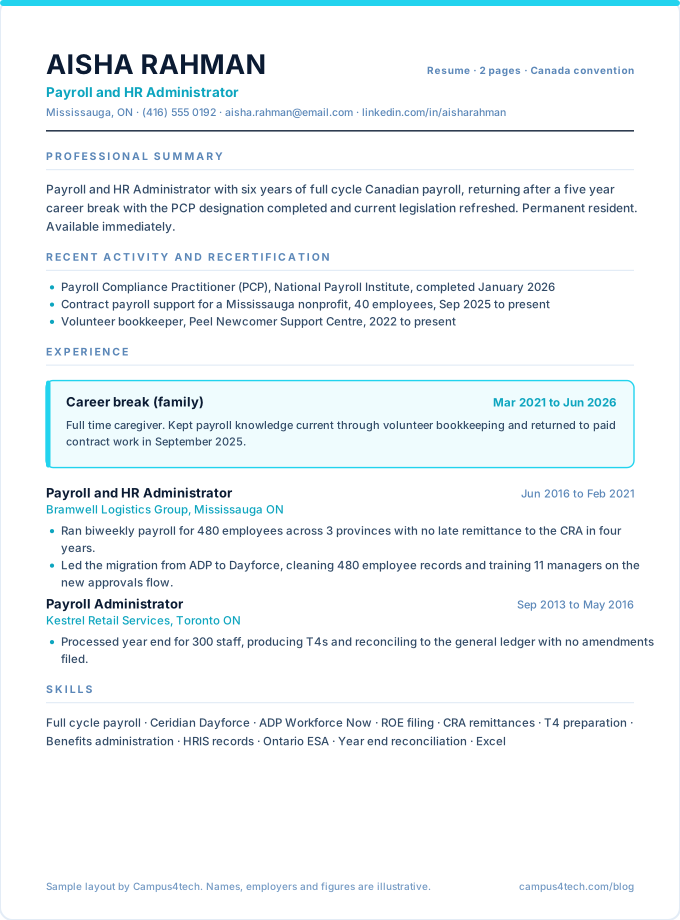
Canada · 5 year break
A long break that ended recently. The page needs dated recent activity, or the most recent evidence of you is from 2021.
What this version does differently
- Payroll legislation changes every year, so a five year break needs a dated refresher on the page. This one has three.
- Contract work is the fastest way back in this market and it gives you a Canadian referee from this year.
- The break entry names the volunteer bookkeeping, which is genuine relevant activity rather than filler.
Canada convention
Canadian resumes look close to US ones but two pages is accepted and a work authorisation line near the top saves the recruiter a question they cannot legally ask directly.
Want this done to your own CV? Send it to our team for a review .
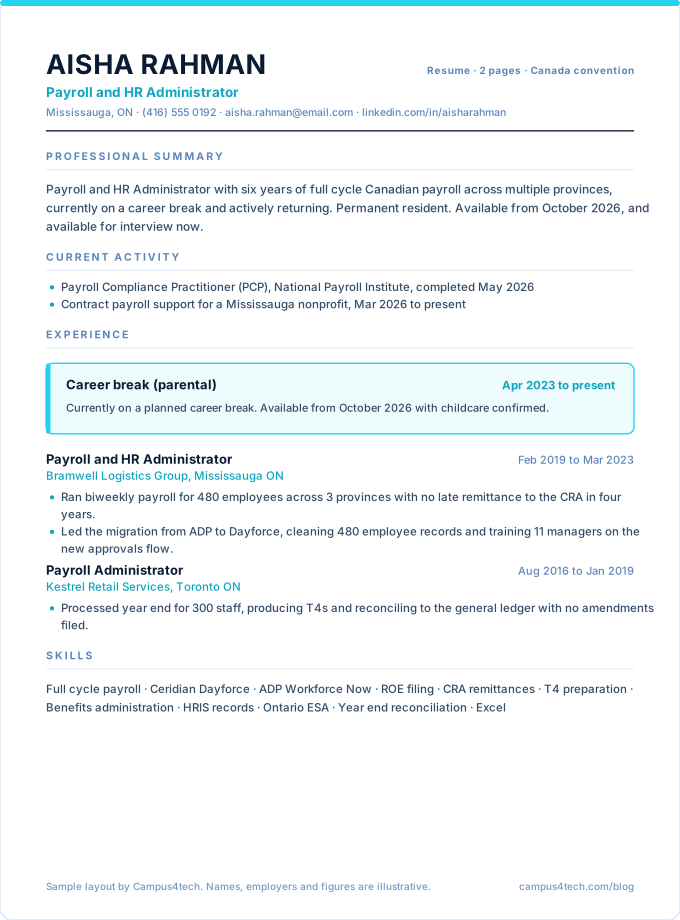
Canada · 2023 to present
You are still on the break and applying anyway. The break entry ends in Present and the availability date is stated on the page.
What this version does differently
- Work authorisation plus a firm availability date removes the two practical objections in a single reading.
- The break entry says present because it is present. The dates will be cross checked against LinkedIn.
- Contract work during a live break is worth listing. It shows the return has already started.
Canada convention
Canadian resumes look close to US ones but two pages is accepted and a work authorisation line near the top saves the recruiter a question they cannot legally ask directly.
Want this done to your own CV? Send it to our team for a review .
You have been out of work since your maternity leave started, and the CV sitting on your laptop still ends with the job you left. Every time you open it you get stuck in the same place: the space between the last date and today, and what on earth to put in it.
So the CV goes out unchanged, or with one apologetic line added at the bottom. Nothing comes back. And the conclusion you reach, quietly, is that employers are screening out mothers.
Some of that happens. But it is not what is happening to most of the applications you are sending. In the majority of cases the CV is being rejected for something far more boring and far more fixable: it describes the professional you were three years ago, in the language of the job you left, with a hole in the middle that the reader has to interpret without your help. The break is not the weak point. The document is.
I spend most of my week with people in exactly this position, and the rebuild follows the same pattern almost every time. This article is that rebuild, section by section, with the actual wording.
The problem, stated plainly
Your CV is being asked to do two jobs and is currently failing both.
The first job is to survive a scan of roughly the top third of page one. That is where a recruiter decides whether to keep reading. After a break, the top third of most CVs still carries a job title from a role that ended years ago and a profile paragraph written for a different search.
The second job is to account for time. A reverse chronological CV is a timeline, and the reader will follow it. If it goes 2019, 2020, 2022, then blank, the reader stops and starts guessing. Guessing costs you far more than a labelled break ever will.
Both problems live in the document. Both are fixable in an afternoon.
Why it happens: the mechanism, not the platitude
Four things are working against a returner CV at once, and none of them is prejudice.
Reverse chronological format rewards recency, and you have none on the page. The format itself is not the enemy, but it puts your most dated content in the most valuable position unless you deliberately restructure the top of page one.
Applicant tracking systems read text, not intent. Most employers and agencies run a keyword search across their CV database. If your CV says “requirements gathering” and the recruiter searched “business analysis stakeholder workshops”, you are not rejected, you are simply absent. Your break has nothing to do with it.
Your bullets are written in the past tense of a person who has left. “Was responsible for”, “assisted with”, “helped the team to”. That language reads as junior even when the work was senior, and after a break it compounds the impression that you are out of practice.
Confidence leaks into wording. This is the one I see most. People come back from a break and soften everything. They downgrade “led” to “supported”, drop the numbers, and add a line explaining themselves before anyone has asked. A reader picks up that tone in about four seconds and it colours everything after it.
What the recruiter is actually thinking
It is worth knowing what is going through the head of the person on the other side, because it is much narrower than most candidates imagine. Reading a returner CV, a recruiter is running three questions:
“Can this person do the role I am filling right now, this quarter?”
“Is anything on here recent enough that I can defend it to the client?”
“If I ring them today, will they be able to start, and will they be ready to talk about the last three years without falling apart?”
That is the whole list. Nobody is thinking about your parenting. They are thinking about whether they can put your CV in front of a hiring manager without having to explain anything themselves. Your job is to answer those three questions on page one so they never have to ask.
Do you have to mention maternity at all?
No, and it is worth being clear about the ground you are standing on.
In the UK, pregnancy and maternity are protected characteristics under the Equality Act 2010. An employer cannot lawfully reject you because you took maternity leave. You are also under no obligation to state the reason for a break on your CV, and there is no legal requirement to name it in an interview either. If you want to check your rights around leave, pay and returning to work, GOV.UK is the authority on maternity pay and leave, and ACAS publishes free guidance on returning to work.
Practically, though, most of the returners I work with choose to name it, and it usually works in their favour. A one word reason closes the question. Silence keeps it open, and an open question in a recruiter’s head tends to resolve into something worse than the truth.
Use whichever of these you are comfortable with. All four are fine:
Career break (Mar 2023 to Aug 2026). Maternity and family care.
Career break (Mar 2023 to Aug 2026). Parental leave, followed by full time caring responsibilities.
Career break (Mar 2023 to Aug 2026). Family commitments. Completed BCS Foundation Certificate in Business Analysis, Feb 2026.
Career break (Mar 2023 to Aug 2026). Planned break. Freelance bookkeeping for two small businesses throughout.
Notice what none of them do. None apologise. None run past two lines. None say “unfortunately”. The tone you want is the same one you would use for a secondment or a relocation, because in the reader’s mental filing system that is exactly what it is.
The rebuild, section by section
Work down the page in this order. The order matters, because the top of page one carries most of the weight and you want your best thinking there while you are fresh.
1. The top third: three lines that do most of the work
Delete whatever is currently at the top and rebuild it as four elements: your name, a target title line, a contact line, and a short profile.
The title line is the single most important edit on the whole document. It should be the job you want next, not the job you had last.
| Before | After |
|---|---|
| Priya Sharma, Senior Business Analyst at Northgate Retail (2019 to 2023) | Priya Sharma. Business Analyst. Requirements, process mapping, stakeholder workshops. |
| Rachel Okoye, seeking a return to work after a career break | Rachel Okoye. QA Automation Engineer. Selenium, Java, API testing, CI pipelines. |
| Meera Patel, HR Administrator (currently on a career break) | Meera Patel. Payroll and HR Administrator. UK payroll, RTI submissions, HR systems. |
The versions on the left tell the reader about your past or about your situation. The versions on the right tell them what you can be hired to do. Only one of those is useful in a four second scan.
The profile underneath is three or four lines, no more. It has a fixed job: state the function, state the depth, state what you are looking for. It is not the place for the break story.
Business Analyst with six years in retail and e-commerce, working across requirements gathering, process mapping and UAT for finance and supply chain systems. Delivered the requirements for a stock forecasting replacement used across 40 stores. Returning to work after a planned career break and completed the BCS Foundation Certificate in Business Analysis in February 2026. Looking for a permanent or fixed term BA role in Greater Manchester or remote.
Four sentences. Function, evidence, current status, target. The break is mentioned once, in the third sentence, in a subordinate clause, next to something you achieved. That is the correct amount of space to give it.
2. A recent activity block, directly under the profile
This is the section most returner CVs are missing, and it is the one that changes outcomes fastest.
Immediately below the profile, before your employment history, add a short block with a heading like Recent Professional Activity (2026). Anything dated in the current or previous year goes here, so the reader hits something recent before they hit the gap.
Recent Professional Activity (2026)
- BCS Foundation Certificate in Business Analysis, distinction, February 2026
- Volunteer process review for a local charity: mapped their donor intake process, wrote the as is and to be flows, and specified the changes their CRM supplier implemented in April 2026
- Two freelance requirements workshops for a former colleague’s consultancy, May and June 2026
You do not need all three. One genuine, dated item is enough to change how the rest of the page reads. If you currently have none, this is the highest value four weeks you can spend, and it is worth doing before you send another twenty applications. Short paid work counts most. A real project with an output someone can look at comes next. A current certification comes after that. Volunteering in your actual function counts more than people expect, because it is dated, verifiable and describable in exactly the same language as paid work.
Be honest about scale. “Mapped their donor intake process” is a truthful description of a small piece of work and reads perfectly well. “Led digital transformation for a charity” is not, and it will fall apart in the first interview.
3. The career break entry, in its correct place
The break goes in your employment history, in date order, formatted like a job. Same left column, same font, same spacing. Formatting it differently draws the eye to it, which is the opposite of what you want.
Career break | Mar 2023 to Aug 2026 Maternity and family care. Maintained professional currency through the BCS certification and volunteer business analysis work listed above.
One line of reason, one optional line of content. Then move on. There is no version of this entry that is improved by a third line.
4. Experience: rewrite for value, not for duties
This is the longest part of the job and the part people skip. Your existing bullets almost certainly describe responsibilities. Rewrite them to describe outcomes, and keep the tense simple past. Nobody is confused by past tense in a past role. What loses you the reader is vagueness.
The pattern that works: what you did, on what, with what result or scale.
| Before | After |
|---|---|
| Responsible for gathering requirements from stakeholders | Ran requirements workshops with finance, buying and store operations to specify a stock forecasting replacement across 40 stores |
| Assisted with UAT | Wrote and executed 120 UAT scripts, triaged defects with the supplier, and signed off the release with zero critical issues outstanding |
| Helped with process documentation | Documented 14 end to end order management processes, which became the training material for a new eight person team |
| Worked on automation testing | Built a Selenium and Java regression suite of 300 tests, cutting a two day manual cycle to under three hours |
| Handled payroll for the company | Ran monthly payroll for 240 employees across three entities, including RTI submissions, statutory payments and year end reporting |
Read the right hand column and notice what happened to the break. It got smaller. A reader who has just absorbed six concrete, specific things you actually delivered is not sitting there thinking about a date range. This is why the bullets matter more than the break line does.
Two rules while you are in here. Do not inflate. Every number on the page must be one you could talk about calmly for two minutes. And do not delete achievements just because they are three years old. Three year old delivery is still delivery.
5. Skills: the section the search actually reads
Give yourself a plain skills block with real, searchable terms. No skill bars, no star ratings, no “advanced” and “intermediate” labels. Just the words, grouped, because a database search is looking for the words.
Mirror the language of the adverts you are applying to. Open three job adverts for your target role, list every tool and term that appears in at least two of them, and make sure the true ones appear on your CV in the same form the advert used.
| Target role | Terms worth having on the page, if true |
|---|---|
| Business Analyst | requirements elicitation, user stories, acceptance criteria, process mapping, BPMN, as is and to be, UAT, stakeholder management, Jira, Confluence, SQL, BCS |
| QA Automation Engineer | Selenium WebDriver, Java, TestNG, Cypress, Playwright, API testing, Postman, REST Assured, CI/CD, Jenkins, Git, regression suite, ISTQB |
| Payroll and HR Administrator | UK payroll, RTI, PAYE, statutory sick pay, statutory maternity pay, auto enrolment, pensions, Sage, Xero, HRIS, starters and leavers, year end |
| Oracle HCM Consultant | Core HR, Absence Management, Fast Formula, HDL, HCM extracts, security roles, Redwood, functional design documents |
| Project Coordinator | project planning, RAID log, governance, budget tracking, MS Project, resource scheduling, PRINCE2, status reporting |
Only include what you can defend. A skills section is a promise about what you can be asked about.
6. What to delete
UK CVs carry things that stopped being useful a long time ago, and returner CVs carry more of them than most. Cut these:
- Photograph, date of birth, marital status, nationality, number of children. None of these belong on a UK CV. They add nothing and they invite bias you cannot see happening.
- “References available on request”. Everyone knows. It is a wasted line in the most valuable part of the page.
- A personal objective that talks about what you want. “Seeking a challenging role in a dynamic organisation” says nothing about what the employer gets.
- Every job before roughly 2014. One line each is fine for context. Full bullets are not.
- Any apology. “Although I have been out of the workplace”, “despite my career break”, “I hope you will consider”. Delete all of it. Every single time.
- Hobbies, unless they carry evidence. Treasurer of a committee is evidence. “Reading and socialising” is filler.
Three worked rebuilds
A. Business Analyst, three year break, returning in Manchester
The problem: last role ended in 2023, CV opened with the old employer’s name, and every bullet started with “responsible for”.
Before, top of page one
Priya Sharma Senior Business Analyst, Northgate Retail (2019 to 2023) A hardworking and motivated professional seeking to return to the workplace after a career break, with excellent communication skills and attention to detail.
After, top of page one
Priya Sharma Business Analyst. Requirements, process mapping, stakeholder workshops. priya.sharma@email.com | 07xxx xxxxxx | Manchester | linkedin.com/in/priyasharma
Business Analyst with six years in retail and e-commerce, working across requirements gathering, process mapping and UAT for finance and supply chain systems. Delivered the requirements for a stock forecasting replacement used across 40 stores. Returning after a planned career break and completed the BCS Foundation Certificate in Business Analysis in February 2026. Looking for a permanent or fixed term BA role in Greater Manchester or remote.
Recent Professional Activity (2026) BCS Foundation Certificate in Business Analysis, distinction, Feb 2026. Volunteer process review for a local charity, mapping donor intake and specifying CRM changes delivered in April 2026.
Same person. Same three year break. Completely different first four seconds.
B. QA Automation Engineer, fifteen month break, targeting contract work
The problem: the tooling on the CV had moved on during the break, and the CV read as a permanent employee applying reluctantly to contracts.
After, profile
QA Automation Engineer with five years testing web and API products in financial services. Built and maintained a 300 test Selenium and Java regression suite that cut a two day manual cycle to under three hours. Refreshed on Playwright and TypeScript during a fifteen month parental break, with a public GitHub repository of the practice suite. Available immediately for a contract inside or outside IR35.
Three specific things happen there. The old evidence is quantified. The tooling gap is named and closed rather than hidden. Availability is stated, which for contract work is the single fact a recruiter is scanning for. If you are targeting contract roles after a break, say “available immediately” on the page. It removes the main hesitation a recruiter has about a returner, which is not your skills, it is your notice period and your certainty.
C. Payroll and HR Administrator, five year break, wants part time
The problem: five years is long enough that the software genuinely changed, and the CV led with a request for reduced hours.
After, profile
Payroll and HR Administrator with seven years running end to end UK payroll for organisations up to 240 employees, including RTI submissions, auto enrolment, statutory payments and year end. Returning after a five year family break. Completed CIPP payroll technician training and a Sage 50 Payroll refresher in 2026, and currently processing monthly payroll for a 30 person charity on a voluntary basis.
The hours question is nowhere on that page, and that is deliberate. We will come to it.
The hours and flexibility question
This one comes up in every conversation, so let us deal with it directly. Do not put your hours requirement on your CV.
Not because it is unreasonable. Because of sequencing. A CV has one job, which is to make someone want to speak to you. The moment a hiring manager reads “seeking part time, school hours” in your opening profile, that becomes the first fact they know about you, ahead of the 240 person payroll you used to run. Many roles advertised as full time turn out to be flexible once a specific person is wanted for them, and almost none of them are flexible for a name on an application form.
Raise it on the first call with the recruiter, before either side has invested time. Something like this works:
“Before we go further, it is worth me being straight with you about hours. I am looking for around 30 hours a week, and I am flexible on how those are spread, including some evening work if that suits the team. If this particular role has to be a full five days I would rather know now than take up your client’s time. Is there any flexibility on it?”
That is honest, early, and easy for a recruiter to act on. It also signals that you are practical rather than making demands, which matters more than the number of hours does.
The same goes for salary. It does not belong on a CV. If an application form forces a figure, give a range and say it is negotiable for the right role.
The covering email that actually gets read
Most cover letters are not read. The short email that carries your CV is. Keep it to five sentences and put the break in the middle, never at the start.
Subject: Business Analyst application, Priya Sharma, BCS certified
Hello James,
I am applying for the Business Analyst role advertised on your careers page. I have six years as a BA in retail and e-commerce, most recently specifying a stock forecasting replacement rolled out across 40 stores. I took a planned career break for family reasons and returned to study this year, completing the BCS Foundation Certificate in February and running a volunteer process review for a local charity in April. I am available to start at short notice and I am based in Manchester, so I can be on site as often as the team needs.
My CV is attached. I would welcome a short call.
Priya
Notice the structure. Role, evidence, break with content, availability, ask. The break sits in sentence three, surrounded by things you did, and takes exactly one sentence.
Getting past the ATS without gimmicks
Most agencies and mid sized employers run your CV through a parser before a human sees it. You do not need to trick it. You need to not break it.
- Send a .docx unless the advert asks for a PDF. Agencies frequently reformat CVs onto their own template, and a Word file makes that easy. A PDF sometimes parses badly and always parses less predictably.
- One column. No text boxes, no tables for layout, no headers and footers carrying important content. Parsers frequently lose everything inside a text box or a header. A table used for layout can scramble the reading order entirely.
- Use standard section headings. Profile, Skills, Experience, Education, Certifications. Creative headings like “My Journey” are not recognised by the parser and it may fail to categorise the content underneath.
- Write dates the same way everywhere. Mar 2023 to Aug 2026, consistently, on the CV, the application form and LinkedIn. Mismatched dates are one of the few things that genuinely triggers a manual rejection.
- Name the file properly. Priya Sharma Business Analyst CV.docx. Not CV final v4 updated.docx.
- No white text keyword stuffing. It is detected, and being caught doing it ends the application immediately.
If you want an outside read on how yours parses and how it lands, you can send your CV to our team for a review and we will tell you what a recruiter sees in the first four seconds.
Common mistakes, and what to do instead
| Mistake | Why it costs you | Do this instead |
|---|---|---|
| Hiding the break by using years only, so 2019 to 2023 covers a gap | Recruiters read year only dates as concealment and check LinkedIn immediately | Use month and year everywhere and label the break |
| Explaining the break in the opening profile | It becomes the first thing anyone knows about you | One subordinate clause, third sentence, next to an achievement |
| Apologising anywhere on the page | Sets a defensive tone the reader carries into the interview | State facts, no qualifiers |
| Stacking three certifications before applying | Delays you by months and adds less than one piece of real work | One current certification, then start applying |
| Leaving the profile written for the old job | The top third does not match the roles you are applying to | Rewrite the title line to the target role |
| Sending the same CV to every advert | The keywords never match closely enough to rank | Mirror the true terms from each advert |
| Putting hours or salary on the CV | Becomes the headline fact about you before your skills are read | Raise hours on the first call with the recruiter |
| Applying only to fully remote roles | The most competitive segment of the market, by a wide margin | Include hybrid roles within commuting distance |
| Waiting until the CV is perfect | The CV improves faster from feedback than from redrafting | Send it at 90 per cent and iterate |
Recruiter tips you will not read elsewhere
Get one recent thing dated in the current year, then stop optimising. The difference between a CV with nothing from 2026 and a CV with one real item from 2026 is much larger than the difference between one item and four.
The second job after a break is far easier than the first. A six month contract resets your entire timeline. If a fixed term or interim role appears and it is broadly right, take it seriously, even if it is not the destination.
Apply through a person where you can. After a break, a CV that arrives with a recruiter’s covering note gets read differently from one that arrives through a portal. This is where working with an agency genuinely earns its place, and it is why standalone job support exists for experienced people who do not need training at all, just submissions and targeting.
Ring fence your search hours. Returners often job hunt in fragments around childcare, which turns a three month search into a nine month one. Two protected blocks a week beat daily scrolling.
Rehearse the break answer out loud before the CV goes out. Not in your head. Out loud. The interview will come faster than you expect once the CV is right, and the answer that reads calmly on paper often comes out apologetic when spoken.
Do not date yourself out of the race with an eleven year employment history. Ten to twelve years, two pages, everything older compressed to one line.
Your CV checklist
Work down this list once. If everything is ticked, send it.
- Title line names the role you want, not the role you left
- Profile is four sentences: function, evidence, status, target
- Break mentioned once in the profile, in a subordinate clause
- A Recent Professional Activity block sits above your employment history
- At least one dated item from this year appears in it
- Career break entry is in date order, formatted like every other role
- Break entry is two lines maximum, with no apology
- Every bullet says what you did, on what, with what result
- At least five bullets carry a number
- Skills section uses the exact terms from three real job adverts
- Dates use month and year, and match your LinkedIn exactly
- No photo, date of birth, marital status or family detail
- No hours request and no salary figure
- Two pages, one column, no text boxes, no layout tables
- Saved as Your Name Role CV.docx
- Covering email is five sentences with the break in sentence three
- Someone honest has read it and told you where it sounds defensive
Frequently asked questions
Should I put my maternity break on my CV?
Yes, as one short labelled line in your work history. Write Career break, followed by the months, and a few words of context. You do not have to use the word maternity if you would rather not. An unexplained hole invites a worse assumption than the truth, and it makes your dates look inconsistent when a recruiter cross checks your CV against LinkedIn.
How do I explain a three year gap on my CV after having a baby?
Label the period, then give it content. One line naming the break and the reason, then any real activity: a course, freelance work, a volunteer role, school governor duties, bookkeeping for a family business. If the three years genuinely hold none of that, spend four weeks creating one dated item now rather than writing four paragraphs of explanation later.
Is it legal for UK employers to reject you for taking maternity leave?
No. Pregnancy and maternity are protected characteristics under the Equality Act 2010, so rejecting a candidate for having taken maternity leave is unlawful discrimination. In practice, very few rejections are that explicit. Applications are far more often filtered out for stale keywords, unexplained date gaps, or a profile written for the job you left rather than the one you want.
How far back should my CV go after a long career break?
Ten to twelve years of detail is plenty, and two pages is the UK norm. Give full bullets to your last two relevant roles, compress anything older into one line each, and drop early jobs that no longer support your target. A CV that opens with a role from 2009 tells the reader you have nothing recent to lead with.
Should I say I want part time hours on my CV?
No. Keep the CV about capability and raise hours with the recruiter at the first phone call, before the process invests time in you. Putting it in your CV profile makes it the first thing a hiring manager reads about you, ahead of your skills, and many roles that are advertised full time turn out to be negotiable once someone wants to hire you.
Can experienced candidates get job support without training?
Yes. Most people returning after maternity leave do not need a course, they need targeting, a rebuilt CV and someone putting them in front of employers. Campus4tech offers standalone job support with no training attached, covering CV and profile rebuilds, applications, employer submissions and interview preparation. We continue working with candidates until they are successfully placed.
Summary
The break is not the problem. A CV that describes the professional you were before it is.
Fix the top third so the first thing anyone reads is the role you want and the evidence that you can do it. Add one dated item from this year, above your employment history, so the reader meets something current before they meet the gap. Label the break like a job, in two lines, with no apology. Rewrite your bullets from duties into outcomes with numbers attached. Match your dates across every place they appear. Then send it, and adjust it from the responses rather than from another weekend of redrafting.
Do that, and by the time a recruiter reaches your break line they have already decided they want to speak to you. Which is exactly the order you want those two things to happen in.
If you are coming back from a career break and want an honest read on where your CV is losing people, we do this every day. Campus4tech works with experienced professionals on targeting, CV and profile rebuilds, employer submissions and interview preparation, with no training course attached, and we continue working with candidates until they are successfully placed. The career restart form takes about three minutes, and we will come back to you and look at the CV you are currently sending.
Written by
Anudithi Saxena
Career Consultant
Advises candidates on positioning, interview preparation and career transitions.